
Environment Research and Development
Basic Approach to Research and Development
R&D and Business Development Promotion System
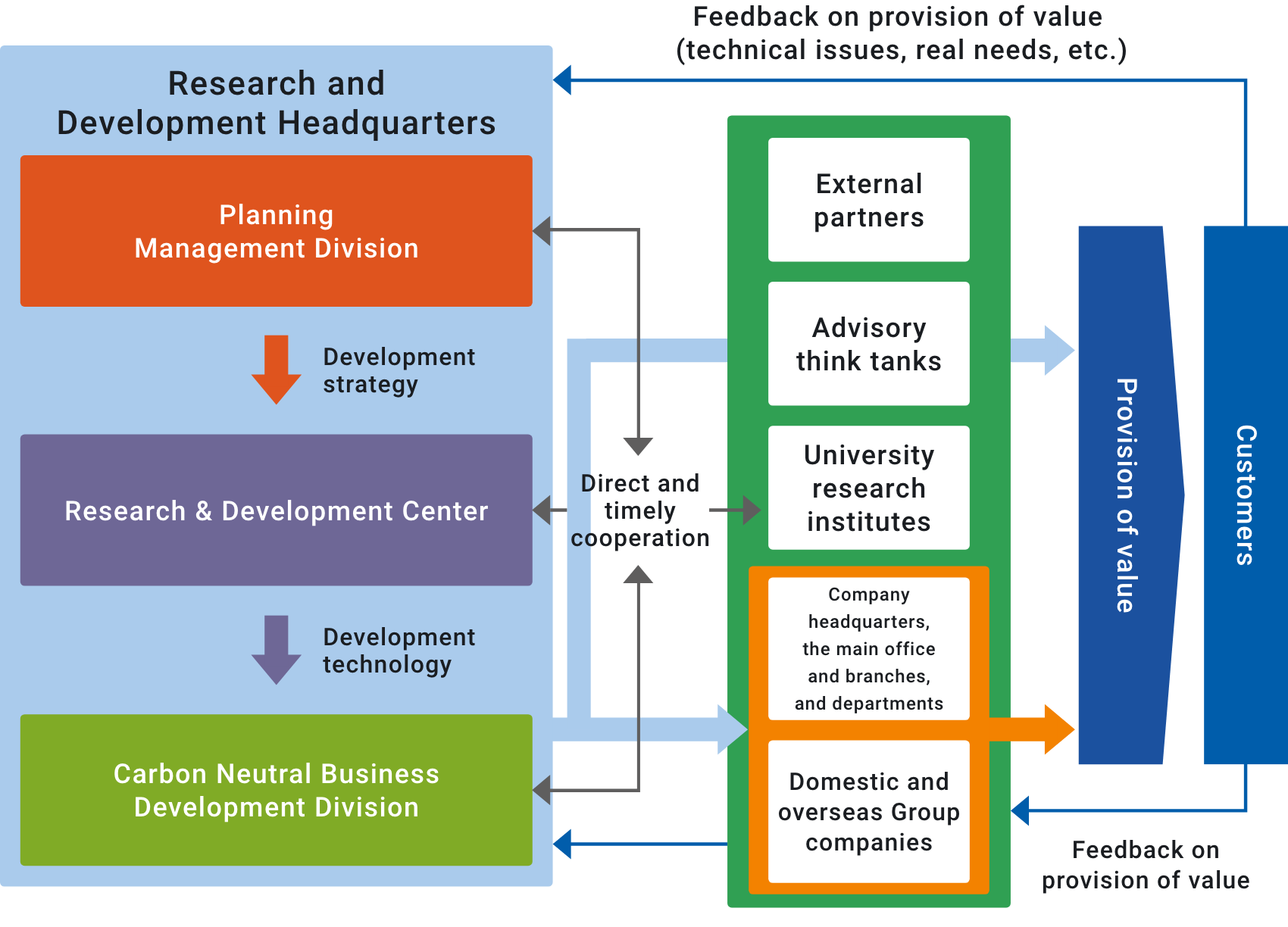
Based on the development strategy formulated by the Planning Management Division, there is a system in which the Research & Development Center is responsible for research and development, and the Carbon Neutral Business Development Division links these outcomes to business initiatives for social implementation by leveraging our proprietary technologies created through the research and development. Through further connection with each organization within the Group, we will contribute to the achievement of the KPIs in the Medium-Term Management Plan.
Research and Business Development Themes
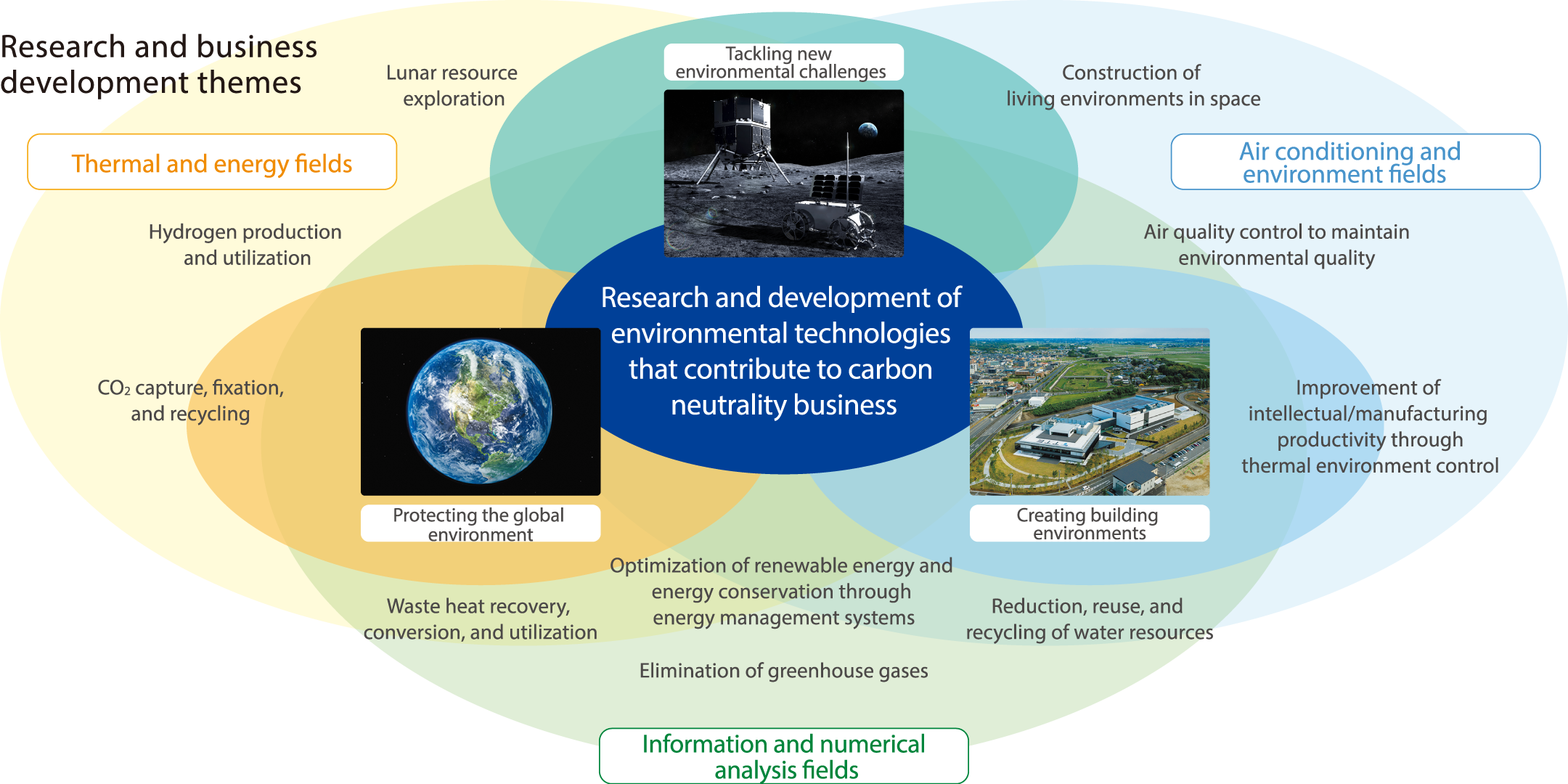
The themes of our research and development are centered on our “three plus α” pillars of “Creating building environments,” “Protecting the global environment,” and “Tackling new environmental challenges.” We have worked to create technologies and products that help to realize a decarbonized society, protect the global environment, improve productivity, reform work styles, and meet other diverse customer needs. Specifically, we are working on the development of technologies for utilizing renewable energy and unused energy, the development of resource recycling technologies, and the performance improvement and verification of technologies introduced at the Takasago Thermal Engineering Innovation Center. In particular, we have positioned hydrogen energy utilization technology, which is expected to contribute to the promotion of decarbonization, as a key development issue, and are promoting the development of related technologies as well as business development.
Research and
Development Initiatives
-
Closed VOC recycling system
-
Adsorbent thermal storage system
Mega Stock® -
Takasago Thermal Engineering
Innovation Center -
The “Tsunagu EMS” energy management system
-
Launch of demonstration project utilizing green hydrogen
Closed VOC recycling system

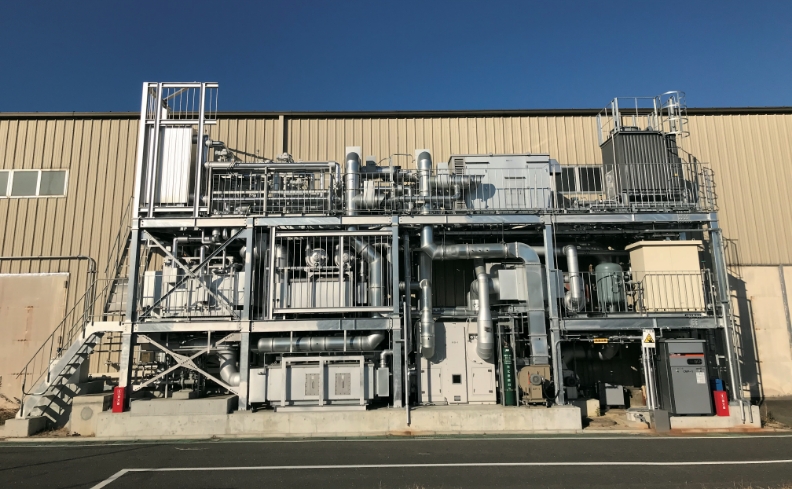
Actual equipment for VOCs with low-boiling points
Toluene, ethyl acetate, NMP, and other major volatile organic compounds (VOCs) are used in a wide range of fields, including cutting-edge lithium-ion batteries, all-solid-state batteries, paints, printing inks, and adhesives.
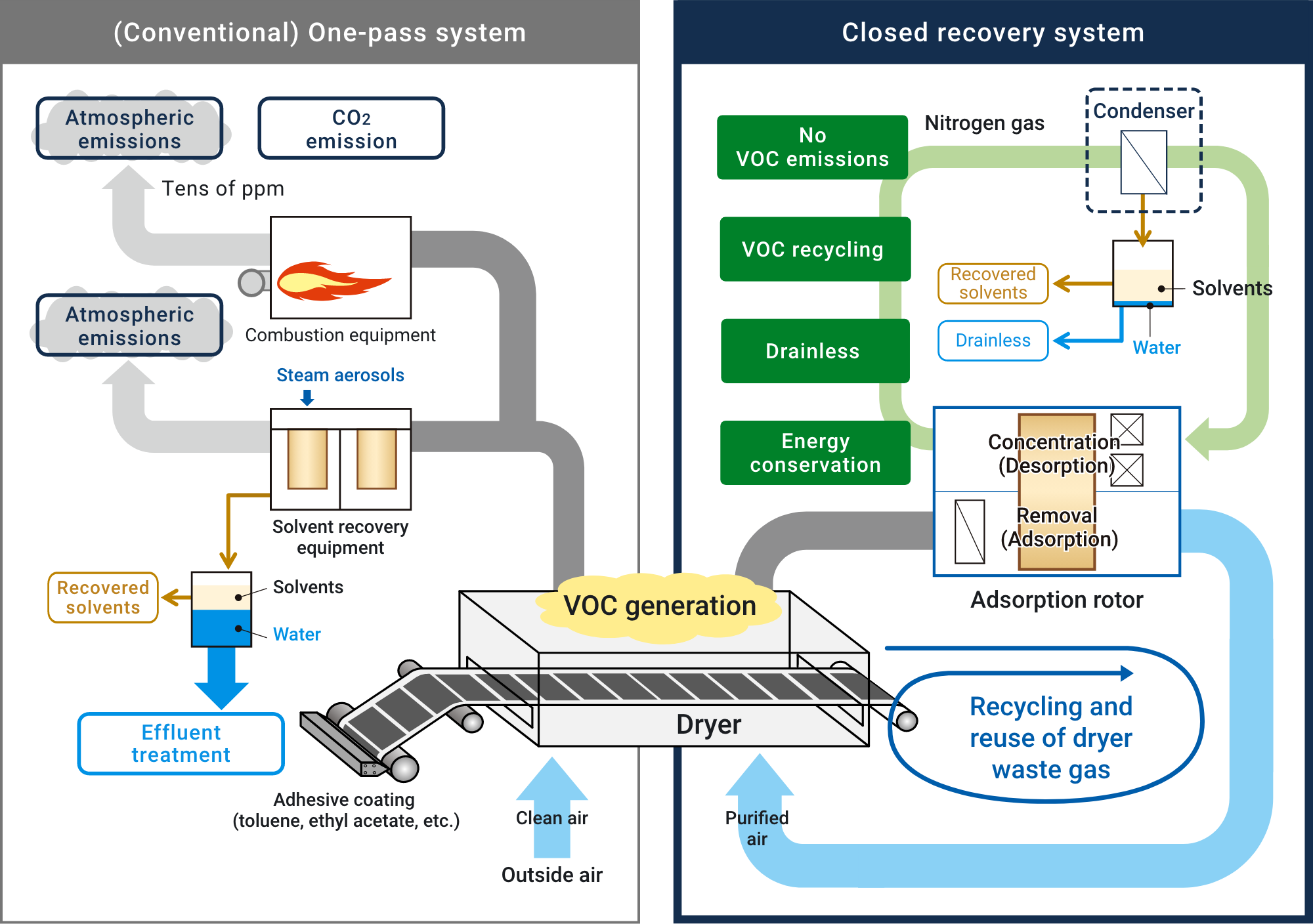
When VOCs are emitted into the atmosphere, they cause air pollution that includes photochemical smog and PM2.5, so exhaust gas resulting from manufacturing processes has been suitably treated in line with laws and regulations in the past. However, the incineration method of treating VOC exhaust gas—the most common approach in the past—was flawed in that pyrolysis could not completely remove VOCs, so a certain amount of them ended up emitted into the atmosphere. In addition, VOC pyrolysis results in the emission of a lot of CO2. Until now, CO2 emissions stemming from the use of pyrolysis were not viewed as a particular problem. However, based on estimates of the Ministry of the Environment (MOE), CO2 emissions resulting from the incineration of NMVOCs (non-methane VOCs) amount to around two million t-CO2 per year. Therefore, under the MOE’s greenhouse gas emission calculation, reporting, and announcement system, starting with the FY2024 report (which describes FY2023 emissions), CO2 emissions due to the incineration of solvents, including NMVOCs, have been added to the scope of calculations of CO2 due to non-energy sources.
In terms of helping to achieve a decarbonized society, companies that handle solvents view the non-incineration treatment of VOCs as an urgent issue. To protect the atmospheric environment, there is also an increasing need to reduce the atmospheric emissions of VOCs that cannot be completely removed.
Therefore, we have developed a system that adsorbs for recovery and treats VOCs without incineration while also reducing the amount of VOCs emitted into the air significantly. Our approach uses a closed system that recycles and reuses air for a solvent dryer after solvent recovery. This greatly reduces the emissions of VOCs into the atmosphere while also reducing the energy necessary to heat and dehumidify gas supplied to the dryer, which makes our system outstanding in terms of environmental friendliness and energy-saving performance. In addition, recycling the recovered solvents reduces the emissions of CO2 during the new-solvent manufacturing process and therefore contributes to resource conservation.
VOC gas treatment method
Awards received
- Japan Air Cleaning Association, 38th Annual Technical Meeting on Air Cleaning and Contamination Control, Chairperson’s Encouragement Award (FY2022)
- National Institute for Environmental Studies/Nikkan Kogyo Shimbun, 48th Environment Award, Award of Excellence (FY2021)
- The fiscal years in parentheses indicate when awards were announced or received.
Adsorbent thermal storage system Mega Stock®
The effective utilization of waste heat and other forms of unused energy is required for further energy saving and reduction of CO2 emissions in industrial areas. While the use of high-temperature waste heat for power and steam generation, etc. is promoted, most low-temperature waste heat of around 100°C is discarded into the atmosphere at present because its uses are limited and the mismatch in time and space between the supply of the heat and thermal demand makes it difficult to use the heat.
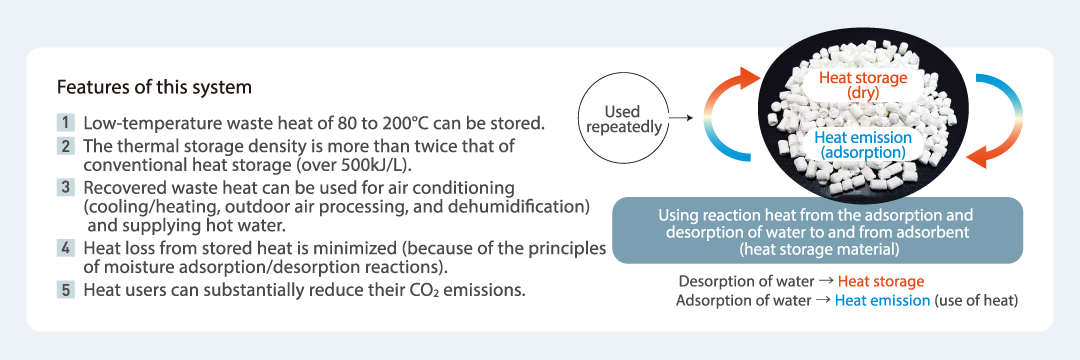
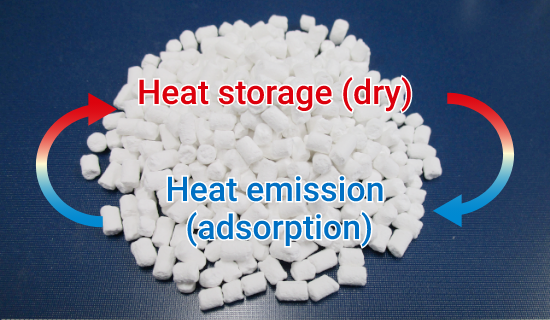
To solve this challenge, we have developed and are marketing a new large-scale thermal storage system that recycles waste/unused heat for air conditioning and as a thermal source.
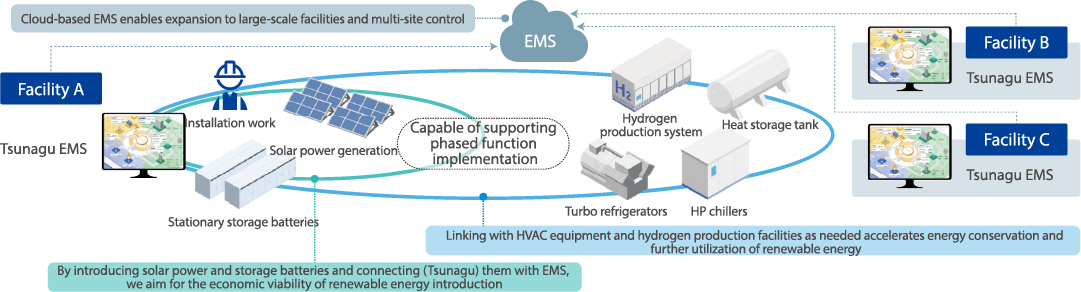
With this system, exhaust heat recovered within plant facilities is stored in a heat storage tank, which enables it to be used in different places and at different times. The heat can be used effectively for dehumidification, air conditioning, drying processes, etc. We also expect to introduce it as an offline heat recovery, transport, and utilization system to recover exhaust heat from sludge and garbage incineration plants of local governments, etc., as well as exhaust heat from factories, and use the heat in the nearby areas.
In FY2018-2019, we launched a demonstration test for the system as a project subsidized by the New Energy and Industrial Technology Development Organization (NEDO) jointly with Hamura City, Tokyo, and five other organizations. We created a thermal storage system using HASClay®︎, a new high-density heat storage material, to collect full-year demonstration data on the fixed type and the offline heat transport type and demonstrated the storage of waste heat from factories, cogeneration exhaust gas, and waste warm water, as well as the use of heat in production lines and commercial facilities. In FY2023, we introduced this equipment to store and reuse unused low-temperature waste heat produced by the Honjo Factory (west site) (in Yurihonjo, Akita Prefecture), TDK Corporation’s largest scale domestic manufacturing and development base.
Awards received
- Advanced Cogeneration and Energy Utilization Center Japan, Cogeneration Grand Prize 2021 (Industrial Division), Award of Excellence (FY2021)
- Japan Machinery Federation, FY2022 Excellent Energy-Saving and Decarbonization Machinery and Systems Award, Chairman’s Award (FY2022)
- The Society of Heating, Air-Conditioning and Sanitary Engineers of Japan, 62nd SHASE Award for Academic Papers, Academic Paper Division (FY2024)
- New Energy and Industrial Technology Development Organization (NEDO), 2020 NEDO Energy Conservation Technology Development Award, Excellent Business Award (FY2020)
- New Energy and Industrial Technology Development Organization (NEDO), 2018 Strategic Innovation Program for Energy Conservation Technologies, Excellent Business Award (FY2019)
- The fiscal years in parentheses indicate when awards were announced or received.
Takasago Thermal Engineering Innovation Center

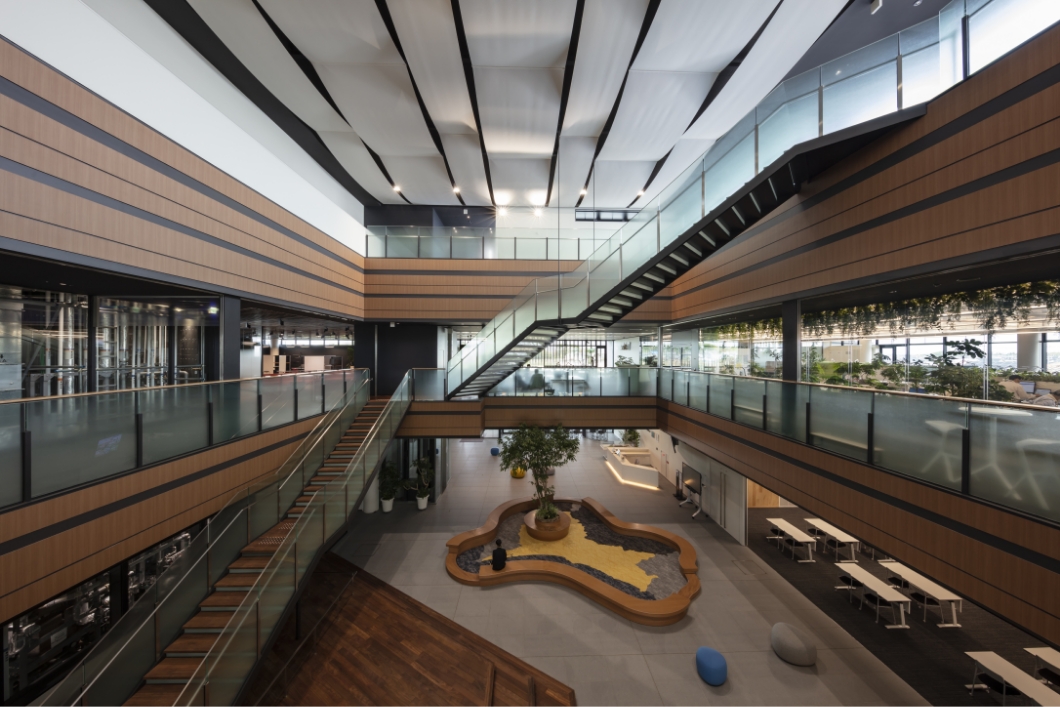
The Takasago Thermal Engineering Innovation Center is designed to embody the concept of sustainable architecture that combines environmental impact reduction with intellectual productivity improvement. It has aimed to achieve ZEB status through the active use of renewable energy and to provide a variety of work spaces that respond to changes in work styles as well as spaces that contribute to communities.
In terms of use of renewable energy, in addition to 200 kW of solar power generation, the Center has introduced 80 kW of biomass gasification power generation fueled by wood chips. It has also achieved carbon-free status by reducing the ratio of electricity received and using green electricity derived from hydroelectric power generation. In addition, the health and comfort of the workers are realized through a desiccant outdoor air processing unit that uses underground water or exhaust heat from biomass gasification power generation, ceiling radiant air conditioning panels, and individual air conditioners that can be operated with personal devices.
Divided into the following four main points, the Center has realized ZEB status by adopting thorough energy-saving technologies and energy-creating technologies not stuck in preconceived ideas. In the indoor environment, human-centric technologies and systems that promote intellectual productivity were proactively adopted to create an environment where employees can actually operate and improve the facility on a daily basis and promptly provide feedback for research and development. In addition, we consider it an important responsibility not only to build buildings but also to communicate and contribute to the local community and society. We have planned and realized the Center to be not only energy independent in normal times but also to provide security to the community even in times of emergency and to be a place for growth in harmony with the local community.
Four main points
Main point 1
- Building plan that incorporates passive energy-saving technology
- New construction technology and sensing/cloud monitoring
Main point 2
- Energy planning for ZEB and off-grid electricity
Main point 3
- Human-centric air conditioning systems, such as personal air conditioning
Main point 4
- Formation of a base for passing on air conditioning technology and contributing to the local community
An open research and development facility
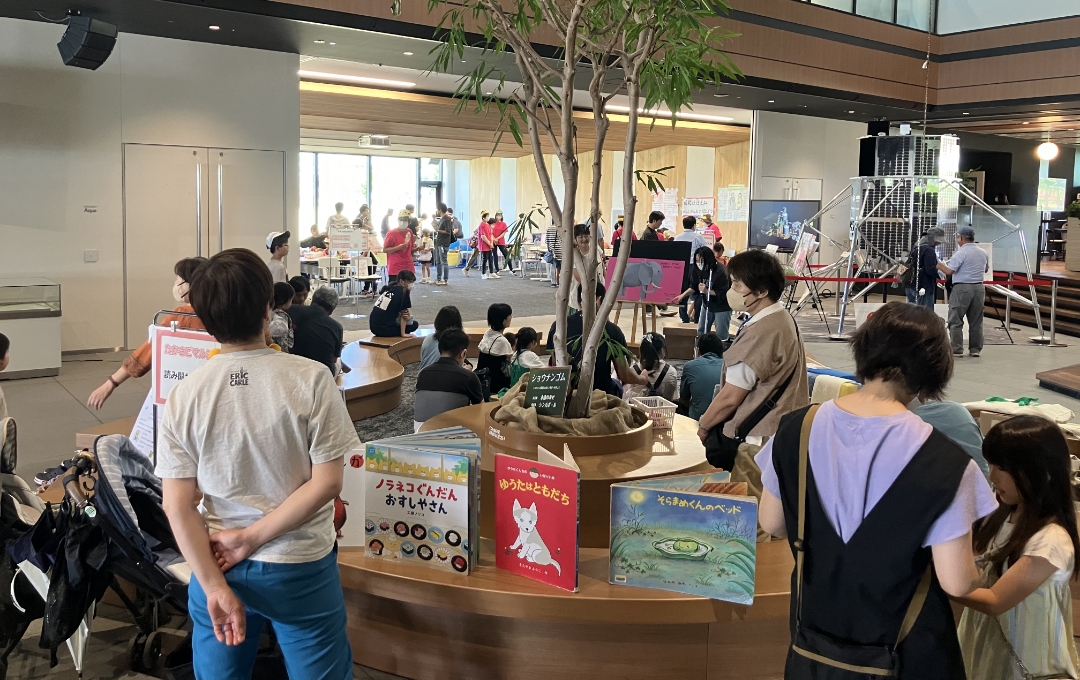
The Takasago Thermal Engineering Innovation Center serves as an “open research and development facility.” It has signed a comprehensive partnership agreement with the local government of Tsukubamirai City, with which it jointly holds the Takasago Marche twice a year, totaling eight events by FY2024. We also actively engage in regional collaboration, such as participating in various environmental conservation-themed events and conducting outreach classes at local elementary schools. These efforts contribute to environmental protection and raise awareness of environmental conservation among elementary, junior high, and high school students, the next generation of Environment-Creator™.
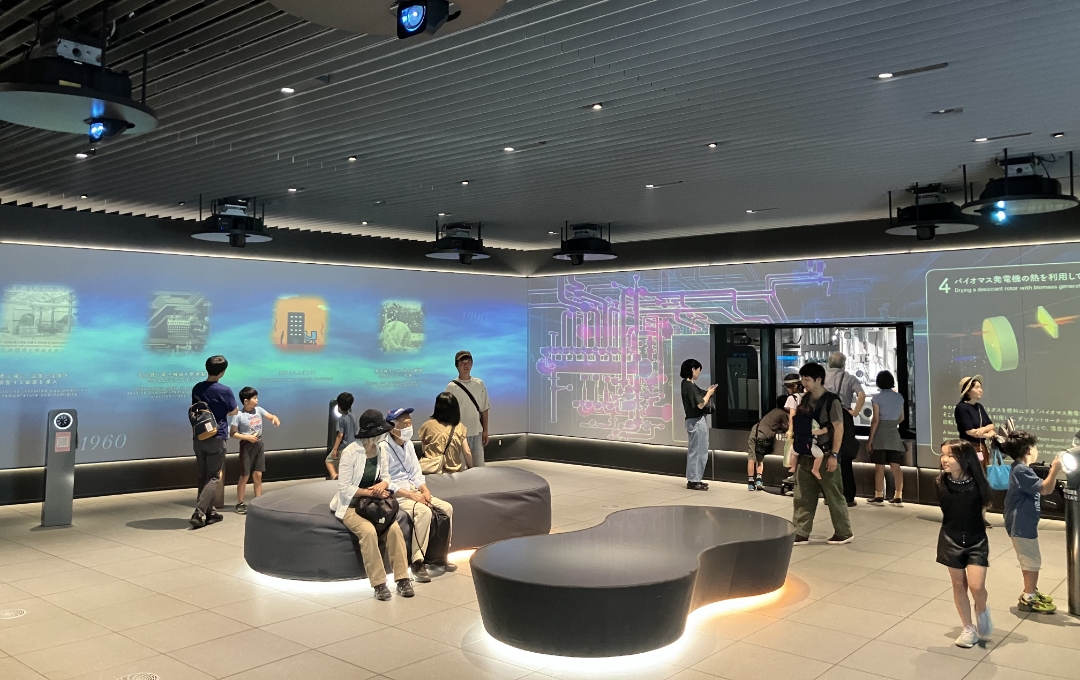
In addition, we actively welcome visits from companies, research institutions, and students. These activities help promote the social implementation of our environmental technologies, strengthen engagement with new customers and partner companies, and support the recruitment of talented human resources.
The “Tsunagu EMS” energy management system
The Japanese government has officially declared its commitment to achieving “carbon neutrality by 2050,” setting an ambitious goal of net-zero greenhouse gas emissions, which has accelerated corporate initiatives toward carbon neutrality. Amid these developments, maximizing the introduction and effective utilization of renewable energy has become an urgent priority in Japan. In particular, efforts to utilize renewable energy at the corporate and local government levels are accelerating, with the implementation of decarbonization centered on energy management systems (EMS) making progress.
Our Long-Term Vision for 2040 positions carbon neutrality-related businesses as a growth area, and we aim to provide energy systems that meet customer and societal needs by engaging in each phase of energy—generation, storage, and consumption—and by connecting (Tsunagu) them together.
Specifically, we are working to meet the demand for green hydrogen appropriately by using water electrolysis equipment to convert green electricity generated from sources like solar power into hydrogen and store it. At the same time, we are actively developing the Takasago proprietary EMS (“Tsunagu EMS”) to connect the production, storage, and use of green energy.
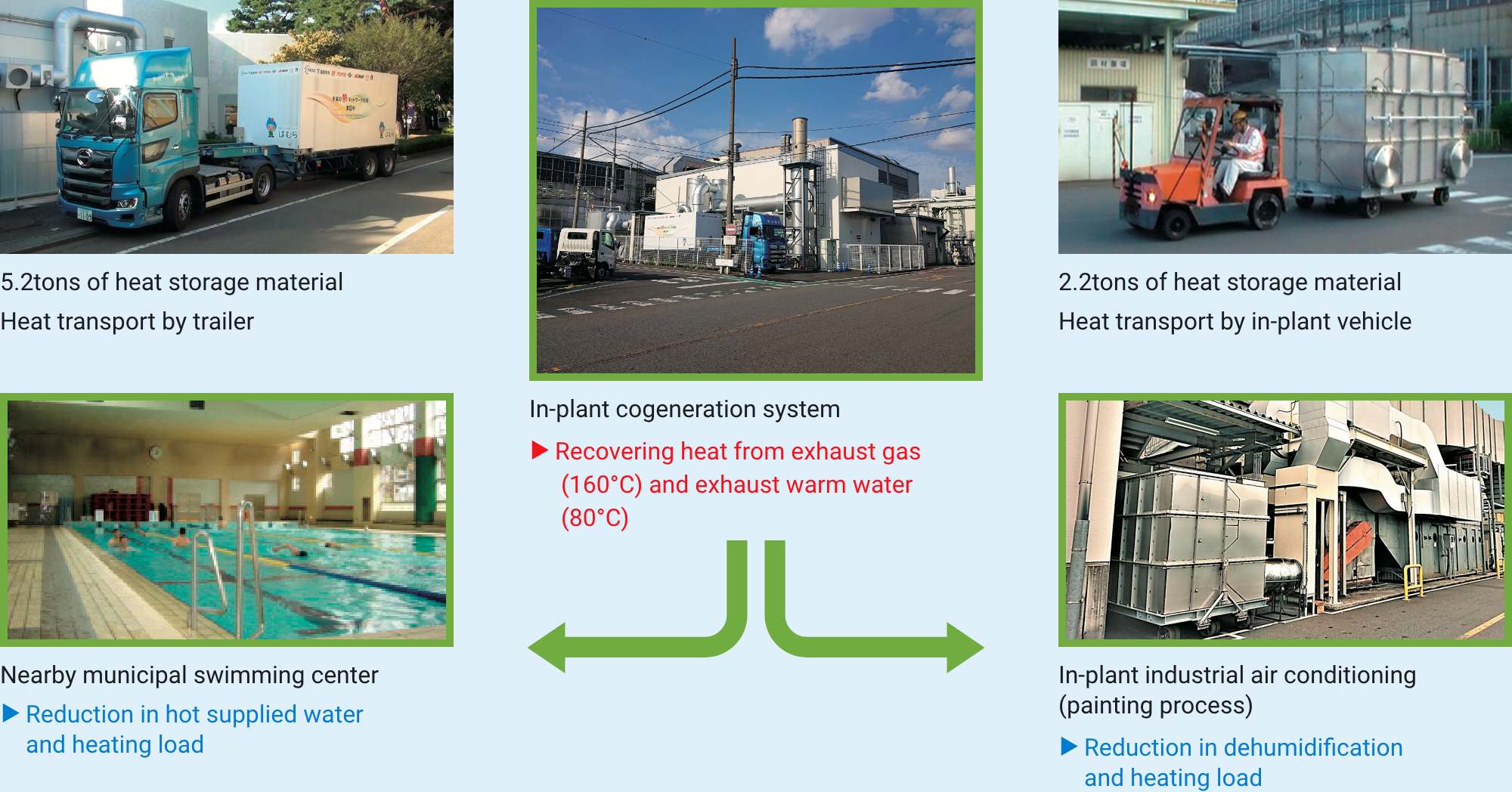
Tsunagu EMS is built as a common platform that combines speed, flexibility, and scalability by adopting the latest system architecture (software technology), making it easy to add or replace necessary functions. This allows for flexible response to the phased introduction of equipment and functions, as shown in the diagram below.
Moreover, Tsunagu EMS offers features such as those outlined in (1) to (3), helping customers to make their green transformation (GX) a reality.
- Enables optimal control and operation of customers’ electricity and heat in our core business areas through peak cut control and maximizing self-consumption
- Achieves optimal control and stable operation in green hydrogen production using large-scale water electrolysis systems
- Provides new revenue opportunities through demand response (DR) and virtual power plants (VPP) by utilizing customers’ surplus resources
Launch of demonstration project utilizing green hydrogen
Takasago Thermal Engineering, along with Kirin Brewery Company, Limited, Mitsubishi Corporation, MCKB Energy Service Co., Ltd., and Miura Co., Ltd., plans to begin a demonstration project in June 2026 at the Kirin Brewery Hokkaido Chitose Plant. This project will convert part of the fuel for steam boilers from fossil fuel-based to green hydrogen-derived sources, utilizing green hydrogen-derived steam in the beer production process. Beer production requires large amounts of steam for heating processes such as boiling wort. In this demonstration, we will switch part of the boiler fuel from city gas to green hydrogen, substituting up to approximately 23% of annual heat demand with hydrogen and reducing greenhouse gas (GHG) emissions by an estimated 464 tonnes. The project is scheduled to run for 10 years starting in June 2026, during which time we will verify the effectiveness of the GHG emission reductions and technical issues of transitioning to green hydrogen.
Additionally, we and Mitsubishi Corporation have established a special purpose company, MT Green Energy LLC, which will participate in this project as the green hydrogen manufacturer and supplier. Moreover, we plan to deploy our newly developed large-scale water electrolysis system (100 Nm3 unit) for the first time. This initiative represents the first project under Carbon Neutrality, one of our four business domains, making it highly significant. It also marks our entry into a new business field: hydrogen supply. Looking ahead to the expansion of hydrogen utilization, we will advance our green hydrogen supply business and contribute to the global environment.
Demonstration project framework
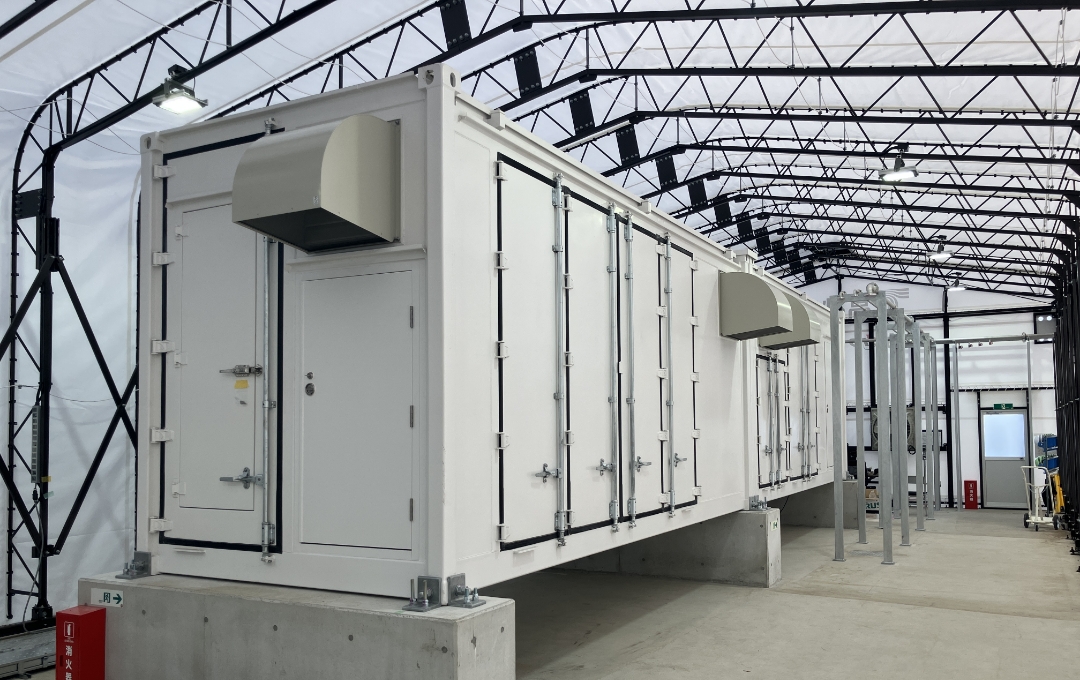
Hydrogen production system
Learn about Our Other ESG Initiatives


- Top
- Sustainability
- Environment
- Research and Development